Showing posts with label Design for Tapestries. Show all posts

Thursday, July 19, 2012

Shaped Tapestry Weavings


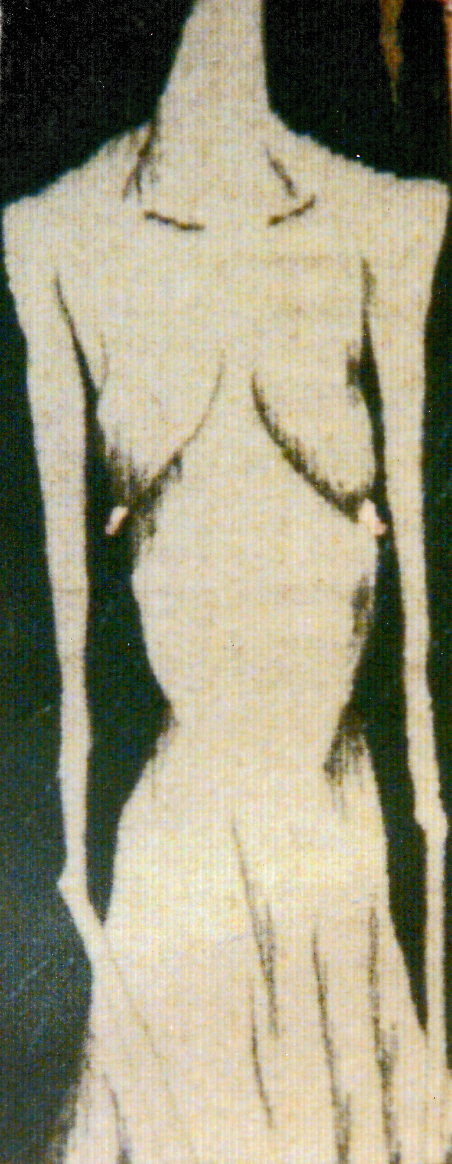
I have used shaped edges on my tapestries from time to time, usually along the beginning and end edges of the weaving, such as the weaving below, which was obviously woven side-ways.

Rapunzel Gets A Life
It was one of two weavings that had a dark nursery theme. They were both framed behind glass, mounted onto and surrounded by a generous sized matt-gold  board, with quite a heavy gold frame which gave them an even more surreal presence on the wall. 

In Search Of Nanook


Of course things get a little trickier when both ends of the weaving need to be shaped. Diane Ammar is a NZ tapestry weaver who has self-published at least two books on her particular technique for shaped weaving. Some are delightfully fine and intriguing works. This is the link to the American Tapestry Alliance site review. http://www.americantapestryalliance.org/Members/NLv31n4/NLv31n4p8.html


Window 2 -  Part of installation at Franklin Steel Gallery.


Tuesday, June 26, 2012

The Link Between Sketchbook and Weaving


Sketchbook drawing
Finished weaving based on sketch above
All sketches have the potential to be used as a basis for weaving a final design. These sketches were part of a series of work that still continues to be a point of reference for me. 

The initial workbook drawings, some of which are shown here, were the result of driving through the Tokoroa/Taupo area where the forestry blocks of pines were being clear-felled for miles around. Although a sustainable crop, the visual effect of recent harvest on such a grand scale was dramatic and brutal. 

This same scenery I remember as a child was a new plantation, bristling the hillside like a scalp-hugging razored hair cut. 
As a teenager the  trees grew to cover the steep gullies and flat plains with an even covering of young healthy looking trees. 
As an adult the landscape became thickened by the undergrowth, the trees looked permanent, strong and sadly non-diverse, a mono-toned investment that looked close to harvesting a return. 
The harvest of this scenery was always part of the plan, always expected, but the totality of it's sudden removal was a violent and apocalyptic scene. Mother earth had been brutalised and it was impossible for me to not record it in some way. 

Sketch for Tokoroa series


Weaving: From 4th With Love

When people have viewed these weavings at exhibition, they have shown a mixed response. Some have been intrigued or captivated, others disturbed and uneasy. For me, neither reaction an audience shows towards the work is more desired than the other. The intent for me is for the viewer to feel a connect with the essence of the piece. Did they experience similar feelings as I felt when I saw the the results of the clear-fell harvest. They certainly wouldn't have identified the with images as forest trees, but they may have had feelings of emaciation, or recognised attributes of the feminine being ravaged or threatened in some way. 
Sketch detail


Weaving detail
At exhibition you normally have the opportunity to read about the ideas behind the series of work you are viewing. Often the work itself is self-explanatory, or can be viewed without any explanation so that the viewer forms their own opinion of what the image is saying. 

However it is always a good idea to make use of any background information the artist has to share, as it can often give you a completely different perspective on the the work. Artist statements offer insight and information that helps the viewer to better understand what it is they are viewing. 
Weaving in progress on loom


Idea taken from section of sketch book page

.
Postcards From The Mothership
Completed weaving from Tokoroa series.

Wednesday, June 6, 2012

Sketchbook Musings

Away from the studio, trying to get focused on a day of sketching and planning up here on the farm, but to no avail. I'm being totally un-disciplined, shall I tidy the yellow room/library which screams chaos so as to allow myself a small work-space for fore mentioned creative doodles and musings, shall I snatch an hour in the garden, or will I warp up the loom in the kitchen? No. I shall post some pics from my sketch book and then skype Max. Sorry for this little self indulgence folks. 


MAX


Weaving in Progress.

Quick post showing progress of work on the loom for the weaving But The Suiters Do Not Suit Her. 


Try and remember to keep a visual record of all your work whenever possible, including some of the work in progress. It helps to put what you have achieved on the loom into perspective by reminding you of the time frame involved and the technical choices made. It keeps a record of the process and design involved in the making of that particular piece, what worked well, what challenged you, what made the piece relevant to you and the rest of your work as a whole. 

Friday, February 25, 2011

Tapestry Weaving from Drawn or Painted Design to the Finished Woven Image.


Above is a cartoon I have documented as it is being woven in the photos below. The original painting has been adjusted in Photoshop to produce a workable cartoon. This process helps to clarify and select clear boundaries within the painting. By simplifying the original painting with Photoshop or a similar program I was able to create an image that still retained the integrity of the original painting, while at the same time creating a weavable cartoon which better suited the technical restraints of the low warp count I was working on. 

Note that in this instance the weaving has well and truly deviated from the exactness of the detail, especialy in the dogs main body area. There are 3 reasons for this. The first is that the warp count was too low (there should have been more vertical threads). The second is because the size of the weaving space is too small (it would need to be a much bigger weaving to allow for the detail to be included). And thirdly, it was a play piece of my own, which enabled me to have the freedom of extreme artistic license. It now belongs to Su anyway, who lives near the dingo isle of Fraser, and who also happens to have been born in the year of the Dog.


                                           1.
                                           2.
                                           3.
THE MAIN BODY AREA OF THE DOG HAS BEEN WOVEN USING HAND-SPUN DOG HAIR. OTHER YARNS USED ARE RAYON, WOOL, COTTON AND SILK.


Saturday, October 2, 2010

WEAVING AS ART... EXHIBITIONS, DESIGN AND RECOGNITION.


I have always loved exhibiting my work and have decided that I am now at the stage of my weaving career where I probably need to produce less but larger works. Once I get my next Solo Exhibition out of the way in June 2011 I will be making a concerted effort to do larger works for a while.
The next 18 months or so for me are mainly being committed to four major exhibiting opportunities producing large works. It has been nice to get back my focus on the planning and design of fewer, but more important works. These working drawings and concepts are what carry the final piece, giving the underlying strength to simple designs, the x-factor that makes a tapestry weaving gel with the viewer, drawing them back for a second look maybe. Where did the weaver get their idea to weave that particular image? These are the types of questions that once answered, help the viewer to better relate to each individual tapestry weavers work.


I am available for several types of tapestry workshops, particularly design focused sessions should a group of you wish to get together. If you have a particular area of interest I am able to customize a learning workshop to meet your needs. For details and costs e.mail:       warpedartanddesign@gmail.com

Saturday, June 12, 2010

HAND MADE DESIGNER RUGS FOR YOUR HOME.


All Warped Art & Design rugs are woven using N.Z. milled commercial pure wool carpet yarn and set on a cotton warp. Durable and purpose made, the designs are original one-off pieces. Commission works can be made to suit your own specific interior design needs.


The hall runner at left was a commission piece made for a client in Tonga, and took approximately 80 hours to complete. Most rug prices range from $350-$1800 depending on length and complexity of design.


Feel free to E.mail me for a virtual catalogue of current rugs I have in stock.


Sunday, January 31, 2010

E.P.I. CONTINUED....

Woven on a much finer warp thread at approximately 10 e.p.i. allows for more detail to be incorporated into a design. Being woven at 10 ends-per-inch still makes it a reasonably low warp count and the jump from vertical warp-to-warp threads is clearly noticeable where the line of the cheek on the face meets the main background. If the warp had been set at 20 e.p.i. this would be far less obvious, however the hours of work involved completing it would be much increased.


I love this weaving …Beyond The Wall Of Melancholy
Every now and again you produce a piece of work that you feel is as close to what you were trying to create as you wanted. For me this is definitely one of those pieces. By having such a strong visual impact, it manages to strike a chord with viewers, and got a half page review in the FEATURE PLUS section of the Timaru Herald when it was exhibited at the Aigantighe Gallery while promoting the 2009 National Creative Fibre Exhibition in April last year. It is often this type of unexpected hands-on support from people who are unfamiliar with me or my work that feed the artist within….. Soul food is good too.

* If you would like to help feed the artist without, the piece remains unsold and represents approximately 40 hours work. Offers that support the principles of N.Z. Fair Trade can be sent to me via my blogspot E-mail address.

"Chester" What you see is what you get.


Another one from the archives... This weaving has been woven facing this way up, or across the weaving as you are veiwing it. The strength of the horizontal lines in the design dominate the weaving. There aren't that many verticals, and the few obvious ones are manageable enough to weave without having too much affect on the resulting image. Despite the clean lines of his shirt, he looks a little strung out and devious, and although this has absoblutely nothing to do with the weaving process it is never the less still worth noting. Compare the flow lines of the hair in this weaving with the one below, and you are now able to view tapestry weaving with a more technical eye for details.


Although this is an early work that is reasonably basic in its design and construction, I still find weavings like this unashamedly simple and compelling.

Which Way is Up?


This archival weaving is a good example of how the design dictates the direction of the weaving process. This piece, and the weaving "Moehau" below, were woven sideways so to speak. If you look at the images with this in mind it is easy to see that vertical lines in a design need to be carefully planned, and that these vertical lines will ultimately determine whether the piece will be woven on the loom vertically or horizontally.

Saturday, January 30, 2010

TEXTURE & SURFACE


I have always preferred to use a selection of yarns in the weavings I produce, and for me the mixing of these different wools, cottons and rayons in particular give the weaving a less flattened and more interesting appearance. When trying to present 2-dimensional fibre art as fine art, I like to enhance the texture of the surface, especially as my weavings tend to be pictorial and the images in them easily identifiable.

The use of texture range is important in the weaving if the veiwer is likely to critique it in the same context as a 2-dimensional painting, As much as that, having all those cones of scrappy odds & ends feeds the magpie in me, and gives an excuse for all the space-wasters in my studio storage area to exist.

Tapestry Weavings By Stephenie Collin


WELCOME TO MY BLOG....


I hope you find Warped Art & Design both interesting and inspiring, and that it will encourage anyone working with fibre to investigate and experiment further within their chosen field.


The basic loom, which is my tool of trade, has remained technologically unchanged. This aspect appeals to me as I weave contemporary images on a machine of such simple and ancient construction.

And if the loom be silenced,
then needles, threads and fingers
have plenty more to say.


About Me

My photo
Waiuku, Auckland, New Zealand
I am an artist, weaver, gardener, mother and grandmother, home food gatherer, political sceptic, modest future eater, and much much more.