Thursday, July 19, 2012

Shaped Tapestry Weavings


I have used shaped edges on my tapestries from time to time, usually along the beginning and end edges of the weaving, such as the weaving below, which was obviously woven side-ways.

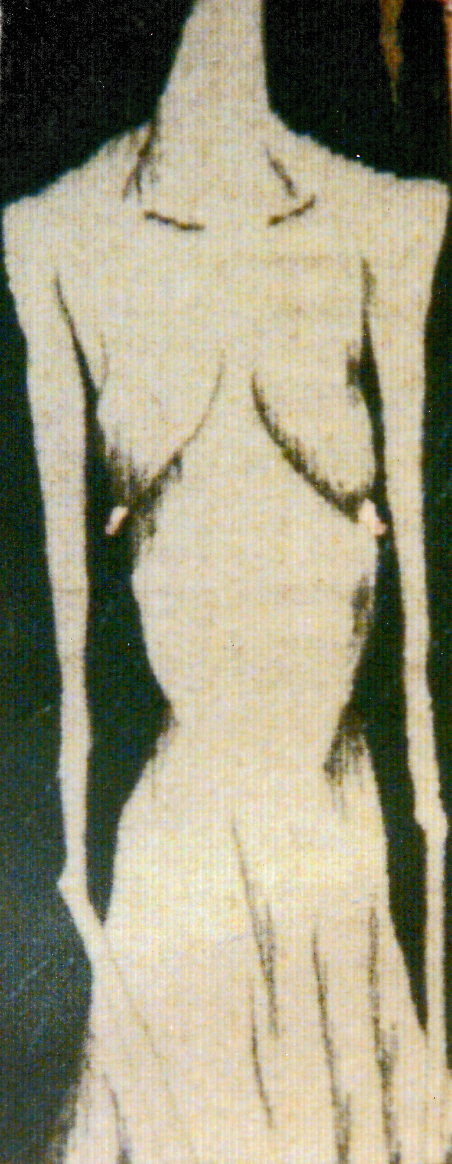
Rapunzel Gets A Life
It was one of two weavings that had a dark nursery theme. They were both framed behind glass, mounted onto and surrounded by a generous sized matt-gold  board, with quite a heavy gold frame which gave them an even more surreal presence on the wall. 

In Search Of Nanook


Of course things get a little trickier when both ends of the weaving need to be shaped. Diane Ammar is a NZ tapestry weaver who has self-published at least two books on her particular technique for shaped weaving. Some are delightfully fine and intriguing works. This is the link to the American Tapestry Alliance site review. http://www.americantapestryalliance.org/Members/NLv31n4/NLv31n4p8.html


Window 2 -  Part of installation at Franklin Steel Gallery.


Tuesday, June 26, 2012

More about Me


Michelle from Threefold Designs and Crafts For Misfits has been interviewing tapestry artists that she has come across through her own interest in weaving tapestry. She is currently a student working towards the Australian Diploma in Tapestry Weaving. A very capable and interesting fibre-artist in her own right, she recently asked me to reply to some questions related to tapestry weaving. To catch my interview and that of two other tapestry weavers, click on the link to her site below.

The Link Between Sketchbook and Weaving


Sketchbook drawing
Finished weaving based on sketch above
All sketches have the potential to be used as a basis for weaving a final design. These sketches were part of a series of work that still continues to be a point of reference for me. 

The initial workbook drawings, some of which are shown here, were the result of driving through the Tokoroa/Taupo area where the forestry blocks of pines were being clear-felled for miles around. Although a sustainable crop, the visual effect of recent harvest on such a grand scale was dramatic and brutal. 

This same scenery I remember as a child was a new plantation, bristling the hillside like a scalp-hugging razored hair cut. 
As a teenager the  trees grew to cover the steep gullies and flat plains with an even covering of young healthy looking trees. 
As an adult the landscape became thickened by the undergrowth, the trees looked permanent, strong and sadly non-diverse, a mono-toned investment that looked close to harvesting a return. 
The harvest of this scenery was always part of the plan, always expected, but the totality of it's sudden removal was a violent and apocalyptic scene. Mother earth had been brutalised and it was impossible for me to not record it in some way. 

Sketch for Tokoroa series


Weaving: From 4th With Love

When people have viewed these weavings at exhibition, they have shown a mixed response. Some have been intrigued or captivated, others disturbed and uneasy. For me, neither reaction an audience shows towards the work is more desired than the other. The intent for me is for the viewer to feel a connect with the essence of the piece. Did they experience similar feelings as I felt when I saw the the results of the clear-fell harvest. They certainly wouldn't have identified the with images as forest trees, but they may have had feelings of emaciation, or recognised attributes of the feminine being ravaged or threatened in some way. 
Sketch detail


Weaving detail
At exhibition you normally have the opportunity to read about the ideas behind the series of work you are viewing. Often the work itself is self-explanatory, or can be viewed without any explanation so that the viewer forms their own opinion of what the image is saying. 

However it is always a good idea to make use of any background information the artist has to share, as it can often give you a completely different perspective on the the work. Artist statements offer insight and information that helps the viewer to better understand what it is they are viewing. 
Weaving in progress on loom


Idea taken from section of sketch book page

.
Postcards From The Mothership
Completed weaving from Tokoroa series.

Wednesday, June 6, 2012

Sketchbook Musings

Away from the studio, trying to get focused on a day of sketching and planning up here on the farm, but to no avail. I'm being totally un-disciplined, shall I tidy the yellow room/library which screams chaos so as to allow myself a small work-space for fore mentioned creative doodles and musings, shall I snatch an hour in the garden, or will I warp up the loom in the kitchen? No. I shall post some pics from my sketch book and then skype Max. Sorry for this little self indulgence folks. 


MAX


Weaving in Progress.

Quick post showing progress of work on the loom for the weaving But The Suiters Do Not Suit Her. 


Try and remember to keep a visual record of all your work whenever possible, including some of the work in progress. It helps to put what you have achieved on the loom into perspective by reminding you of the time frame involved and the technical choices made. It keeps a record of the process and design involved in the making of that particular piece, what worked well, what challenged you, what made the piece relevant to you and the rest of your work as a whole. 

Saturday, May 26, 2012

Warping up for more than one project.


When it comes to warping up I tend to be a good planner, which ultimately allows me to be a very lazy warper. 
As my warp is set at at a pre-determined set on each of the 3-4 different looms I work on, I am able to make use of this personal propensity towards short-cutting through the boring bits. Because I use up-right vertical looms with the capability to wind on metres of warp without too much bother, it makes sense to warp up for several pieces at the start. I weave the most urgently needed weavings first, just in case I need to remove one of them before I have finished all the pieces that follow after them as I make my way through the warp. In other words if I need to remove tapestries before I get to the last ones I planned to weave, I CAN cut off the ones I've done if I need to, then re-tie on the warp to the front beam, and continue weaving the other pieces. Of course this means I will waste a certain amount of the warp, so it is very rarely that this happens. 

Here below is an example of 4 separate weavings that shared a wider warp. 


Note the spare warps between each individual weaving.


The 2 tapestries below are shown here being woven side by side sharing the warp. Note the unused warp threads between the pieces. These weavings were preceded and followed by another wider weaving on the same warp above and below them. In total, this warp-up was enough for me to weave 4 individual works on it.


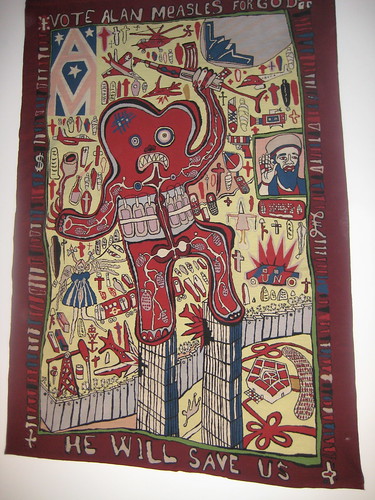
Alan Measles Will Save Us

Alan Measles Will Save Us by gitamalhotra
Alan Measles Will Save Us, a photo by gitamalhotra on Flickr.
Grayson Perry tapestry. Found while surfing on a dull Sunday.

Tapestry Weavings By Stephenie Collin


WELCOME TO MY BLOG....


I hope you find Warped Art & Design both interesting and inspiring, and that it will encourage anyone working with fibre to investigate and experiment further within their chosen field.


The basic loom, which is my tool of trade, has remained technologically unchanged. This aspect appeals to me as I weave contemporary images on a machine of such simple and ancient construction.

And if the loom be silenced,
then needles, threads and fingers
have plenty more to say.


About Me

My photo
Waiuku, Auckland, New Zealand
I am an artist, weaver, gardener, mother and grandmother, home food gatherer, political sceptic, modest future eater, and much much more.